
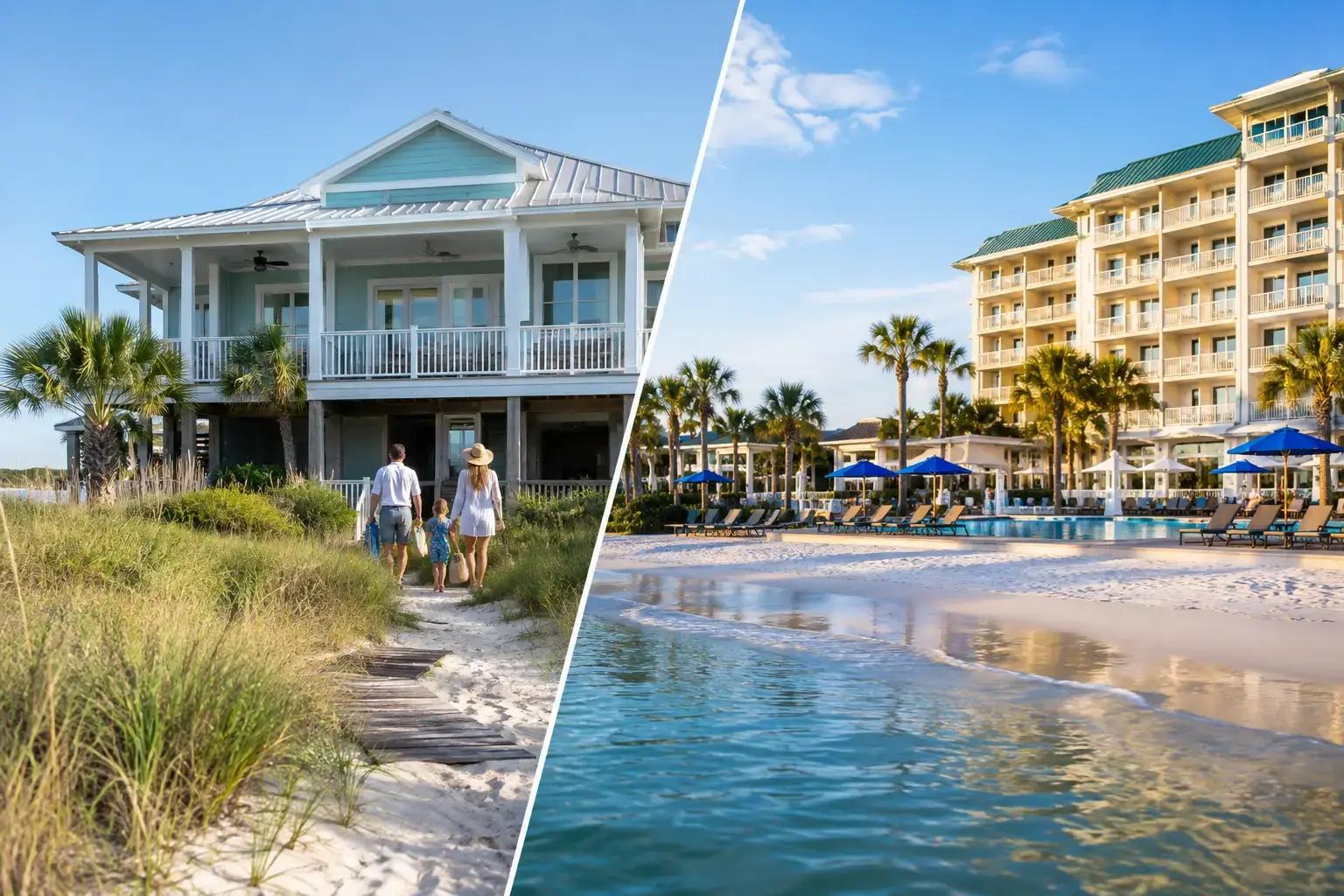
For a three-night Gulf Coast trip, the beach house versus resort decision often comes down to one question: do you want your group to share a home base, or do you want a property built around on-site service? Both can be excellent choices near Ocean Springs and Biloxi, but they create very different days – and their real costs are not always obvious on the first booking screen.
A resort is usually the easier choice when you want staff, pools, restaurants, and a clear divide between your room and the rest of the vacation. A well-run beach house tends to work better when the people traveling together want room to settle in: a proper kitchen, separate bedrooms, a living room where nobody has to perch on a hotel bed, and the freedom to keep their own schedule.
Beach House Versus Resort: The Practical Difference
The biggest difference is not the building. It is how much of the trip happens where you are staying.
At a resort, lodging is typically organized around a room or suite. You may have a balcony, beach access, a pool, and several places to eat within the property. This is convenient for a couple who wants a low-planning weekend, or for travelers happy to spend much of the day at the pool or beach and return to a room mainly to shower and sleep.
A beach house gives the group shared space that belongs only to them. Breakfast can happen in pajamas. Someone can read in the living room while another starts dinner. Children can go to bed without ending the evening for everyone else. For girlfriend getaways, families, and couples traveling with another couple, that layout often changes the trip more than a resort pool ever could.
The trade-off is simple: resorts have built-in service and activity; homes require a little more self-direction. You will make coffee, decide where to eat, and coordinate your own plans. For many travelers, especially those driving in from New Orleans, Mobile, Birmingham, Atlanta, Dallas, or Jackson, that is part of the appeal. After a long drive, a stocked kitchen and a comfortable common room can be more useful than a hotel lobby.
Space and Privacy Favor the House
Resort rooms are efficient, but they can make a group feel crowded quickly. Even adjoining rooms separate people at the exact moments they might want to spend time together. Suites solve some of that problem, though they often come at a significant rate and may still offer only a small kitchenette.
A house is generally better for trips where the accommodations are part of the plan. Look for separate sleeping areas, more than one bathroom, usable seating, and a kitchen equipped for actual meals rather than reheating takeout. Bedroom design matters, too. A room with blackout curtains, comfortable bedding, and a door that closes well is a better retreat after a beach day than a beautiful room with little privacy.
Privacy extends outdoors as well. Resorts can be lively, particularly during spring break, holiday weekends, and summer. That may be exactly right for travelers who want music by the pool and a full calendar of activity. A house in a residential area is usually quieter, although guests should still expect neighborhood rules, normal coastal traffic, and the occasional golf cart passing by.
Service and Amenities Favor the Resort
Resorts earn their higher rates when service is central to your plans. Daily housekeeping, towel replacement, pool attendants, beach chairs, room service, concierge help, and several dining options remove decisions from the day. If you are flying in for a short anniversary trip or want to arrive without stopping for groceries, those conveniences carry real value.
A beach house asks you to choose amenities more carefully. The best homes replace generic hotel convenience with useful comforts: a chef-ready kitchen, laundry, beach gear, parking near the door, a good sound system, outdoor seating, and details that make the house pleasant in bad weather as well as good weather.
For example, a rainy afternoon at a resort may mean the lobby bar or your room. In a house, it could mean cooking together, playing music, using a karaoke system, reading, or letting the kids spread out without feeling confined. At The NERV Haven in Ocean Springs, details such as weighted blankets, foot massagers, a digital piano, a wellness nook, and the art-filled Pauseway are designed for exactly this kind of unhurried in-home time. Those features will not matter to every traveler, but they can matter a great deal when the forecast changes or the group wants a quieter night in.
Compare the Full Cost, Not the Nightly Rate
A resort rate can look straightforward until taxes, resort fees, parking charges, and food costs are added. A beach house can look expensive at first because the booking total may include a cleaning fee, but that number is often divided across several bedrooms and several guests.
For two people staying one or two nights, a resort room may be the cleaner financial choice. There is less space to pay for, less food to buy, and fewer logistics. For four to eight people over a long weekend, a house can offer stronger value if it replaces multiple hotel rooms and lets the group eat breakfast, pack lunches, or cook one memorable dinner at home.
Do not assume a kitchen automatically saves money. A weekend built around local restaurants, seafood, cocktails, and Biloxi entertainment may still cost plenty. The kitchen is valuable because it gives you options. You can make coffee before the beach, keep cold drinks on hand, and avoid turning every meal into a reservation.
When comparing bookings, put the final total next to the usable space. Count bedrooms, bathrooms, beds, parking, beach equipment, and whether the property charges separately for amenities you know you will use. If booking a vacation home, direct reservations may also avoid some platform fees and make it easier to ask the host specific questions before arrival.
Location Changes the Experience
On the Mississippi Gulf Coast, beachfront does not always mean the same thing. Some resorts place you directly on the sand or across from the beach with easy crossings. A beach house may sit in a quieter neighborhood a few blocks back, trading immediate pool access for more room and less crowding.
Ocean Springs is a strong fit for visitors who want beach time without spending the entire weekend inside a resort complex. Its Front Beach area, tree-lined streets, galleries, restaurants, and independent shops give the town a character that is distinct from nearby casino-heavy Biloxi. From a home about five minutes from the beach by foot and roughly 15 minutes from downtown, you can split the day between the water and dinner in town without making the car the center of the trip. Downtown parking is generally manageable, and golf cart rentals can be a fun option for getting around locally.
Biloxi is only about five minutes away by car from central Ocean Springs, making a house on the Ocean Springs side a practical base for travelers who want casino shows, golf, waterfront dining, or a bigger nightlife option without staying in the middle of it. That split is especially appealing for groups with mixed preferences.
Season matters here. Summer brings the warmest water, busy beaches, humidity, and afternoon storms. Spring and fall are often better for walking, outdoor dining, and exploring town, while winter can be pleasantly quiet but less reliable for classic beach weather. Resort pools may be heated only seasonally, so check before booking if swimming is a deciding factor.
Choose Based on the Trip You Actually Want
Book a resort when you want on-site dining, daily service, pool culture, and the ability to arrive with almost no plan. It is a strong choice for a quick couples trip, a fly-in stay, or travelers who prefer a full-service property and do not need much room.
Choose a beach house when your group wants privacy, shared meals, separate bedrooms, and a place where the evening can continue after dinner. It makes particular sense for a three- or four-night Gulf Coast getaway with friends, family, or another couple, especially if Ocean Springs and Biloxi are both on the itinerary.
Before reserving, imagine one ordinary hour of the trip: coffee at 8 a.m., a storm at 3 p.m., or a late-night conversation after dinner. The place that handles those moments best is usually the right place to book.